
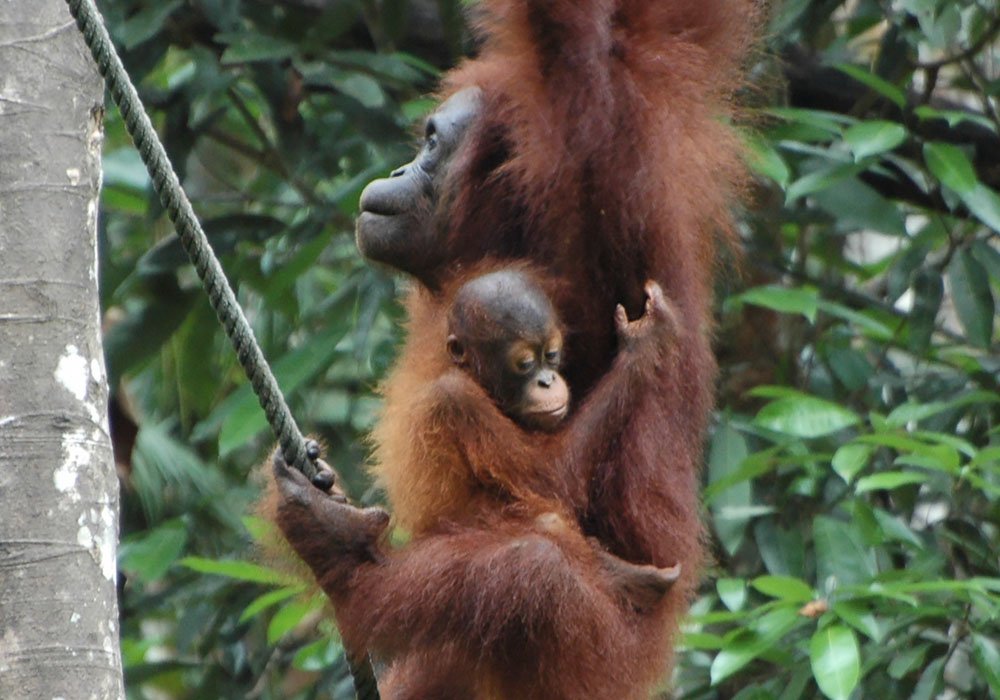
en.Sketsamalang.com – Bornean orangutans (Pongo pygmaeus), classified as Critically Endangered on the IUCN Red List, are facing mounting pressure as forest and land fires spread across Kalimantan. The fires are destroying vital habitat, exposing wildlife to smoke and flames, and forcing conservation teams to rescue animals stranded in damaged forests and plantation areas.
The scale of the threat is reflected in a hotspot analysis by Geopix. Between June 1 and August 28, 2026, the monitoring group recorded 22,744 hotspots across Kalimantan, of which 17,865, or 78.5 percent, fell within mapped orangutan habitat. The findings highlight the overlap between fire activity and areas important to the survival of the species.
Separately, the International Union for Conservation of Nature (IUCN) reported on September 26 that fires were burning within habitats containing 52 percent of Borneo’s orangutan population, including 13 of the island’s 20 largest remaining populations.
The Central Bornean orangutan subspecies, Pongo pygmaeus wurmbii, faces particular concern because a substantial share of its population depends on forests in the region. However, the extent of habitat directly burned should be distinguished from the wider area where hotspots have been detected.
The Bornean orangutan population has declined dramatically over recent decades. WWF cites an estimated 288,500 individuals in 1973 and a current estimate of approximately 55,000. Population estimates vary across studies and geographic assessments, but conservation organizations agree that habitat loss remains a major threat.
The IUCN has also warned about the physical and ecological consequences of exposure to fire and smoke.
“Exposure to fire and smoke has measurable adverse effects on the physical condition, behavior and ecosystem of orangutans in peat forest habitats,” the organization stated in a release carried by AFP on September 26. In English, the statement means that exposure to fire and smoke has measurable physiological, behavioral and ecological effects on orangutans living in peat forest habitats.
Rescue Operations Under Way Across Kalimantan
Indonesian authorities and conservation organizations have stepped up emergency responses as fires threaten wildlife across the region. According to Indonesia’s Ministry of Forestry, 290 wild animals had been handled in connection with the fires as of October 8, 2026. The figure included 96 Bornean orangutans, according to the ministry’s subsequent report.
In West Kalimantan, the provincial Natural Resources Conservation Agency (BKSDA) and the Indonesian Nature Rehabilitation Initiative Foundation (YIARI) reported rescuing 46 orangutans between August and October 9.
Eight of the rescued animals were relocated to Batu Nyambu Protected Forest in Ketapang on October 9 after health checks found them fit for release. The group consisted of three mother-and-offspring pairs and two adolescent males. The relocation was intended to provide the animals with a safer habitat after fires damaged the areas where they had been found.
“Their relocation to Batu Nyambu protected forest is expected to give the eight orangutans a chance to return to living naturally,” the agency said in a statement.
Murlan Dameria Pane, head of the West Kalimantan Natural Resources Conservation Agency, confirmed the scale of the rescue effort in a statement on October 11.
“Since 1 August until 9 October 2026, we together with YIARI have rescued 46 individual orangutans affected by the forest and land fires,” she said.
Rescue and relocation efforts remain challenging because moving animals to safety does not resolve the wider problem of shrinking and fragmented habitat. Orangutans that escape fires may still struggle to find food, nesting sites and connected forest areas. When they are pushed into plantations or settlements, the risk of conflict with people can also increase.
Agricultural expansion, logging and mining have contributed to long-term habitat loss, leaving some orangutan populations increasingly isolated. Repeated fires can intensify that pressure, particularly when damaged forests are not allowed to recover or are subsequently converted to other land uses.
Forestry Minister Raja Juli Antoni highlighted the impact of the fires on wildlife during a visit to Central Kalimantan on October 13.
“Our concern about these forest and land fires is not only for the people suffering from breathing difficulties and respiratory infections, but also for other living beings that cannot even call for help,” he said.
Conservation specialists have warned that emergency rescues alone cannot secure the future of Bornean orangutans. Sustained fire prevention, habitat protection and restoration are essential to help populations recover and reduce the risk of local extinctions, particularly among smaller groups isolated by deforestation.
As fires continue to threaten forests across Kalimantan, the challenge for authorities and conservation organizations is not only to save animals in immediate danger, but also to preserve enough connected habitat for orangutans to survive in the wild.