
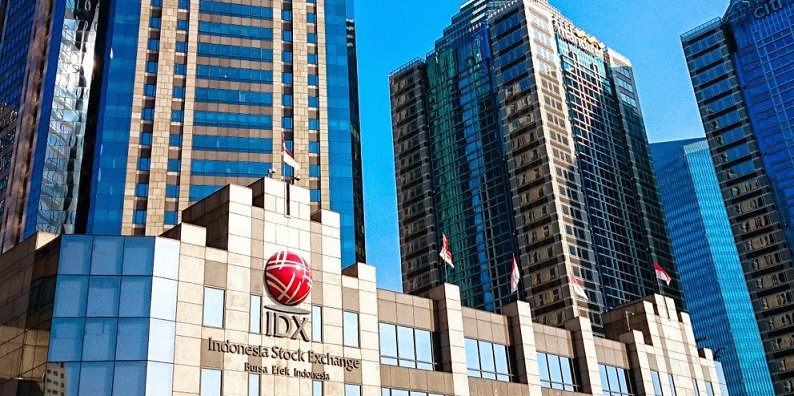
en.Sketsamalang.com – Indonesia’s benchmark stock index closed higher on Wednesday, October 21, 2026, as investors assessed Bank Indonesia’s latest monetary policy decision and continued to monitor uncertainty surrounding a potential change in the country’s market classification by global index provider MSCI.
The Jakarta Composite Index (JCI), known locally as the Indeks Harga Saham Gabungan (IHSG), gained 0.94%, or 49.47 points, to close at 5,328.36, according to data reported by Bisnis.com. The index traded between 5,185.36 and 5,328.36 during the session, recovering from its intraday weakness.
The gain followed a sharp rebound on Tuesday, when the index climbed 5.65% to 5,278.89 after falling to its lowest level in several years amid a broad market sell-off. Despite the recovery, investor confidence remained fragile as market participants weighed regulatory changes and the possibility of further foreign capital outflows.
Bank Indonesia’s monetary policy announcement was among the factors watched by investors. On Wednesday, the central bank kept its benchmark BI Rate unchanged at 5.75%, maintaining the rate for a fourth consecutive policy review. It also raised the overnight deposit facility rate by 25 basis points to 5.00%, while leaving the lending facility rate at 6.50%.
The decision came as authorities sought to maintain financial stability amid pressure on the rupiah and concerns about Indonesia’s stock market. While holding the benchmark rate steady may help support economic activity, currency movements and foreign investment flows remain important factors for market sentiment.
MSCI Concerns Continue to Weigh on Investor Sentiment
Senior Technical Analyst at Mirae Asset Sekuritas Indonesia M. Nafan Aji Gusta said the index’s recovery reflected several factors, including technical buying following significant selling pressure and renewed interest in stocks that had fallen sharply.
“The rebound in the IHSG was driven by a combination of technical rebound after significant selling pressure, bargain hunting in stocks that had corrected sharply, and a positive response to capital market reforms by the Financial Services Authority (OJK) and the Indonesia Stock Exchange,” Nafan said reported by ANTARA News.
The market turmoil intensified after MSCI warned that it was considering changing Indonesia’s classification from an emerging market to a standalone market. The potential reclassification raised concerns about the country’s investment accessibility, ownership transparency, and the ability of international investors to trade listed shares.
A move to standalone status could affect Indonesia’s inclusion in major global investment benchmarks and potentially prompt funds that track those indexes to reassess their exposure to Indonesian equities.
Read Also:
Ferry Irwandi Takes Indonesia’s Forest Fires Global as Fundraising Tops Rp10.5 Billion
In response, the Indonesia Stock Exchange announced measures intended to improve market transparency and address concerns about concentrated share ownership. The proposed measures include excluding stocks with highly concentrated ownership from the JCI calculation and expanding disclosures on affiliations among shareholders with ownership stakes above 1%.
However, analysts have cautioned that regulatory announcements alone may not be enough to restore confidence. Investors are likely to watch how the reforms are implemented and whether they address MSCI’s concerns before making longer-term assessments of the market.
Wednesday’s gains therefore offered some relief following the recent sell-off but did not necessarily signal a sustained recovery. Market direction will continue to depend on investor sentiment, foreign fund flows, currency stability, and the outcome of discussions over Indonesia’s market classification.
For investors, the rebound highlights the difference between a short-term recovery driven by technical buying and a more durable improvement supported by stronger market fundamentals. Until uncertainty over the MSCI review eases and confidence improves, volatility in Indonesian equities may remain elevated.