
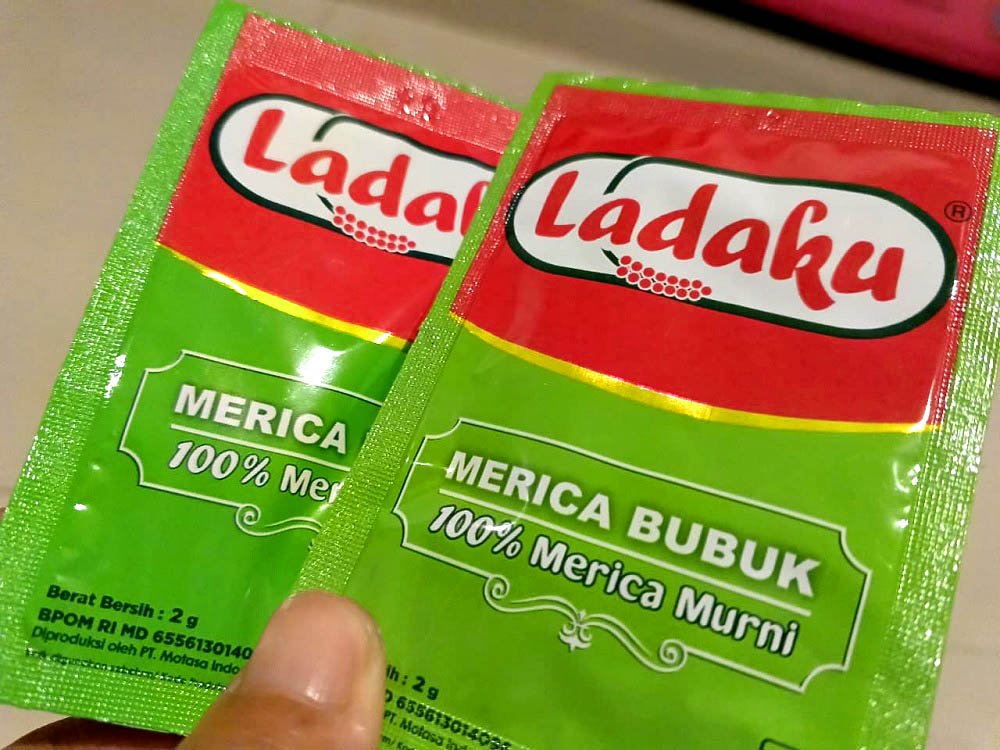
en.Sketsamalang.com – Taiwan’s food safety authorities have blocked a shipment of Indonesian Ladaku ground pepper after detecting two pesticide residues exceeding the country’s permitted limits.
The Taiwan Food and Drug Administration (TFDA) reported the findings on November 17, 2026. The product, manufactured by Indonesia’s PT Motasa Indonesia, contained thiamethoxam at 0.07 parts per million (ppm), exceeding Taiwan’s maximum permitted level of 0.05 ppm.
Inspectors also detected fipronil at 0.003 ppm, above the country’s permitted limit of 0.002 ppm.
The shipment, weighing 24 kilograms and imported by Chang Tjin Trading Co., was stopped at the Taiwanese border, according to the TFDA inspection report cited by Indonesian news outlet detikHealth on November 18, 2026.
The TFDA said products that fail to meet food safety requirements must be returned to their country of origin or destroyed in accordance with applicable regulations.
Shipment Block Does Not Mean Nationwide Recall in Indonesia
The action concerns a specific shipment entering Taiwan and does not automatically mean that all Ladaku products sold in Indonesia have been recalled.
As of November 18, there had been no reported announcement requiring a nationwide withdrawal of Ladaku products from Indonesian markets.
The case has renewed attention on the food safety requirements faced by Indonesian exporters supplying international markets. Importing countries apply their own standards for pesticide residues and other food safety parameters.
The latest finding is not the first time Ladaku products have appeared in Taiwan’s food inspection records.
On April 8, 2025, the TFDA reported that a 24-kilogram shipment of Ladaku ground pepper contained thiamethoxam at 0.12 ppm, more than twice Taiwan’s permitted limit of 0.05 ppm.
Earlier, in July 2024, Taiwanese authorities also recorded excessive pesticide residues in Ladaku White Pepper Powder. The inspection found thiamethoxam at 0.08 ppm, above the permitted limit of 0.05 ppm, according to the TFDA’s official records.
The repeated findings have placed the Indonesian pepper product under renewed scrutiny, although the available reports do not establish whether the shipments involved the same raw materials, production batches or underlying causes.
Read Also:
Indonesian Culinary Diplomacy Festival 2026 Showcases Indonesia in Baku
Another Indonesian Food Product Also Blocked
Ladaku was not the only Indonesian food product flagged in Taiwan’s November 17 inspection announcement.
Authorities also blocked 500 kilograms of raw garlic-flavored crackers manufactured by PT Primajaya Agung Sentosa. The product contained saccharin at 0.39 grams per kilogram, despite the artificial sweetener not being permitted for the relevant product category in Taiwan.
Both Indonesian products were among 10 imported food products that failed Taiwan’s border inspection requirements that day. Six other products originated from China, while one each came from the United States and New Zealand, according to detikHealth.
Taiwan has also tightened inspections of certain Indonesian food imports. Since October 20, 2026, the TFDA has required border inspections for every shipment of processed cereal-based food products from Indonesia. The measure followed findings involving non-compliant artificial sweetener levels in several products.
Wara Agustina Rukmini, Head of the Trade Division at the Indonesian Economic and Trade Office (IETO) in Taipei, said the office was monitoring Taiwan’s notifications and coordinating with Indonesia’s Food and Drug Authority (BPOM).
“We routinely monitor TFDA notifications and continue coordinating with BPOM in Indonesia so that the relevant information can be communicated to businesses,” Wara said, as quoted by detikHealth through CNA.
The latest findings highlight the importance of compliance with destination-market food safety standards for Indonesian food exporters, particularly regulations governing maximum pesticide residue levels.